Licence Conditions and Codes of Practice
Under Option 1, the vast majority of industry respondents projected that there would be an increase in GGY for arcade and bingo operators. A summary of these responses is outlined below. Licensing authority responses were predominantly in favour of Option 2, though a number restated their original position that the current 80/20 ratio should not be changed in the liberalising manner proposed. The majority of industry responses expressed a preference for either Option 1 or Option 3, and were strongly opposed to Option 2. This section of the consultation received 40 responses. Further details of proposed new operating licence fees will follow in due course.
Whilst, those operators who wish to advertise their services in England, Wales, or Scotland, but are based outside the country, have to obtain a licence from the Gambling Commission following the passage of the Gambling (Licensing and Advertising) Act 2014. The Gambling Commission is an executive, non-departmental public body of the Government of the United Kingdom responsible for regulating gambling and supervising gaming law in Great Britain. Premises licence holders must also send us copies of applications to transfer or vary their premises licence(s), or apply for a reinstatement of any lapsed licence(s). When a premises licence or provisional statement is applied for, the applicant must send a copy to us. To obtain a premises licence, a person or business must first hold an operating licence from us authorising them to carry out the activity in respect of which the premises licence is applied for. The comprehensive directory of Gambling Commission licensed operators.
The Key Responsibilities of the UKGC
Regulations made by the Scottish Ministers dealing with the proceedings of licensing boards may make separate provision for the functions of the boards under the Licensing (Scotland) Act and under this Part. The procedures that apply to the proceedings of licensing boards in the exercise of their functions under that Act apply to the proceedings of those boards in relation to their functions under this Part. 422.In Scotland, licensing authorities are licensing boards established under section 1 of the Licensing (Scotland) Act 1976.
- (Optional response)Yes / No / I don’t know
- Please upload any further evidence or any other information that should be considered as part of this consultation relating to an age limit on ‘cash-out’ Category D slot-style machines.
- Bingo club responses ranged from no impact on GGY to small improvements in GGY, with the largest estimated increase in annual GGY being in the region of £4m.
- The proposals outlined in this consultation to reform the 80/20 rule will again permit AGC and bingo premises to retain these legacy rights where the relevant premises licence was granted before 13 July 2011.
- Categories include casino (1968 Act and 2005 Act), bingo, betting, adult gaming centre, and family entertainment centre.
Each should have its own casino premises licence and its own principal entrance from a street, and it must not be possible to enter one of them from other gambling premises. Part 1 of Schedule 1 to the Gambling Act 2005 (Mandatory and Default Conditions) (England and Wales) Regulations 2007 sets out a number of mandatory conditions that are attached to all casino premises licences. However, there must be some degree of physical separation between the licensed premises in order for the operation of these separate licences to be permitted. Currently, a number of 1968 Act casinos operate more than one premises licence at the same physical location. The number of gaming products that land-based casinos can provide will always be constrained by physical space in a way that online casinos are not, but this is made worse by the existing caps on numbers.
The ASA monitors compliance and has the authority to ban adverts that break the rules and issue large fines, which helps ensure that the gambling industry maintains high standards of honesty and social responsibility. Ads must not target minors, feature anyone under the age of 25 in a prominent gambling role, or imply that gambling can enhance personal or financial success. GAMSTOP is free to use and available to anyone with a UK address, and it helps to provide a safety net for individuals experiencing harm or looking to limit their gambling. GAMSTOP is the UK’s national self-exclusion scheme, which is designed to help players take control of their gambling. Its three main aims are to prevent gambling from being a source of crime or disorder, ensure it is conducted fairly, and protect children and vulnerable people.
(3) In Part 5 of Schedule 1 (mandatory conditions attaching to converted casino premises licences)— (2) In paragraph 2(1) of Part 4 of Schedule 1 (mandatory conditions attaching to small casino premises licences), for “500m²” substitute “250m²”. (2) In section 172 (gaming machines), in subsection (5)(b)(i), for “twice” substitute “5 times”. The Gambling Commission’s Notice essentially makes clear that those B2B operators have a role in assisting the Gambling Commission in tackling unlicensed gambling in the British market and that such B2Bs place their own licence at risk by not taking sufficient steps to ensure that its content is only made available to British consumers via licensed B2C websites.
Licensing guidance for operators and local licensing authorities
Regulation 9 also sets committed payment limits, money which cannot be refunded to the player once it is paid or transferred onto the machine’s credit or play meter. Regulation 7 of the Gaming Machine (Circumstances of Use) Regulations 2007 sets the financial (payment) limit on the amount a person can deposit on a machine in a single action. The need to future-proof the land-based gambling sector provides the rationale for change. Consumer preferences therefore indicate that cashless would need to complement, rather than replace, cash as a gambling payment method.
The application fees are assessed pursuant to a somewhat complex online calculation engine on the regulator’s website. There are numerous charitable lottery operators that operate under certain regulatory constraints. On 1 February 2024, the Gambling Commission granted Allwyn Entertainment Ltd a 10-year licence to operate the National Lottery, replacing the previous licensee Camelot. Persons wishing to enter the British land-based casino market have typically purchased existing businesses. There are no tender or bidding processes, other than in the occasional case of land-based casino franchises being proposed.
However, other factors (such as a change in the premises layout) may mean that an application to vary the premises licence is required. That OL will need to be granted to the operator before it can make SSBTs available on the casino premises. As SSBTs involve remote communication, the operator will need to apply to the Commission for a remote general betting (standard) (real events) OL. An existing licensed 1968 Act casino operator wishes to make use of the new Regulations to provide SSBT facilities in its casino. 2This condition only applies to converted casinos that choose to exercise the extended entitlement. While the powers to make changes to gaming machine entitlements are reserved, the protective measures that the government views as necessary accompaniments to any such change are devolved2.
There were 39 responses to this section of the consultation. This would mean any table gaming area would only count towards the minimum table gaming area if it constitutes 12.5% or more of the total table gaming area in the venue. Exempt venues will be prevented from increasing their gambling area further, from 16 May 2024. Those opposed to the reduction preferred a larger minimum table gaming area requirement in place such as 350sqm.

There are currently only three Small 2005 Act casinos in operation from the eight licences available. This requirement was intended to ensure a balanced offer of gaming products in 2005 Act casinos, which had a significantly higher gaming machine entitlement than 1968 Act casinos. The government is proposing to operate two regimes for 1968 Act casinos whereby they can either operate under the existing rules with no increase to their gaming machine allowance or they can take up their new gaming machine entitlements under the new rules. Casinos with multiple licences at the same physical location could site more than 80 machines under the new regime – it is not clear whether the current rules are clear enough to prevent this situation from arising in practice. The implications for operating and premises licence fees, bringing 1968 Act casinos in line with existing fee scales for 2005 Act casinos, are also discussed later in this chapter. It is our intention that these casinos can continue to operate under the existing regime, whereby they are permitted no more than 20 machines where at least one is of Category B (or they may elect to have any number of Category C or D machines instead).
The impact of each option will vary in how these objectives are balanced. For instance, evidence provided by Bacta shows that the average stake placed on a Category B3 game is between £1.20 – £1.30, compared to 40p – 60p for a Category C machine. For example, numbers provided by the Bingo Association show that the number of bingo premises that offer mainstage bingo declined from 335 at the end of 2018 to 272 in March 2023.
More information on the operating licences required is available in our guidance on the legislative changes. (2) A notice must be displayed in a prominent place in each part of the premises used for providing facilities for betting, setting out the terms on which persons are invited to bet on the premises. 4.—(1) This paragraph applies to larger converted casino premises and extended converted casino premises.
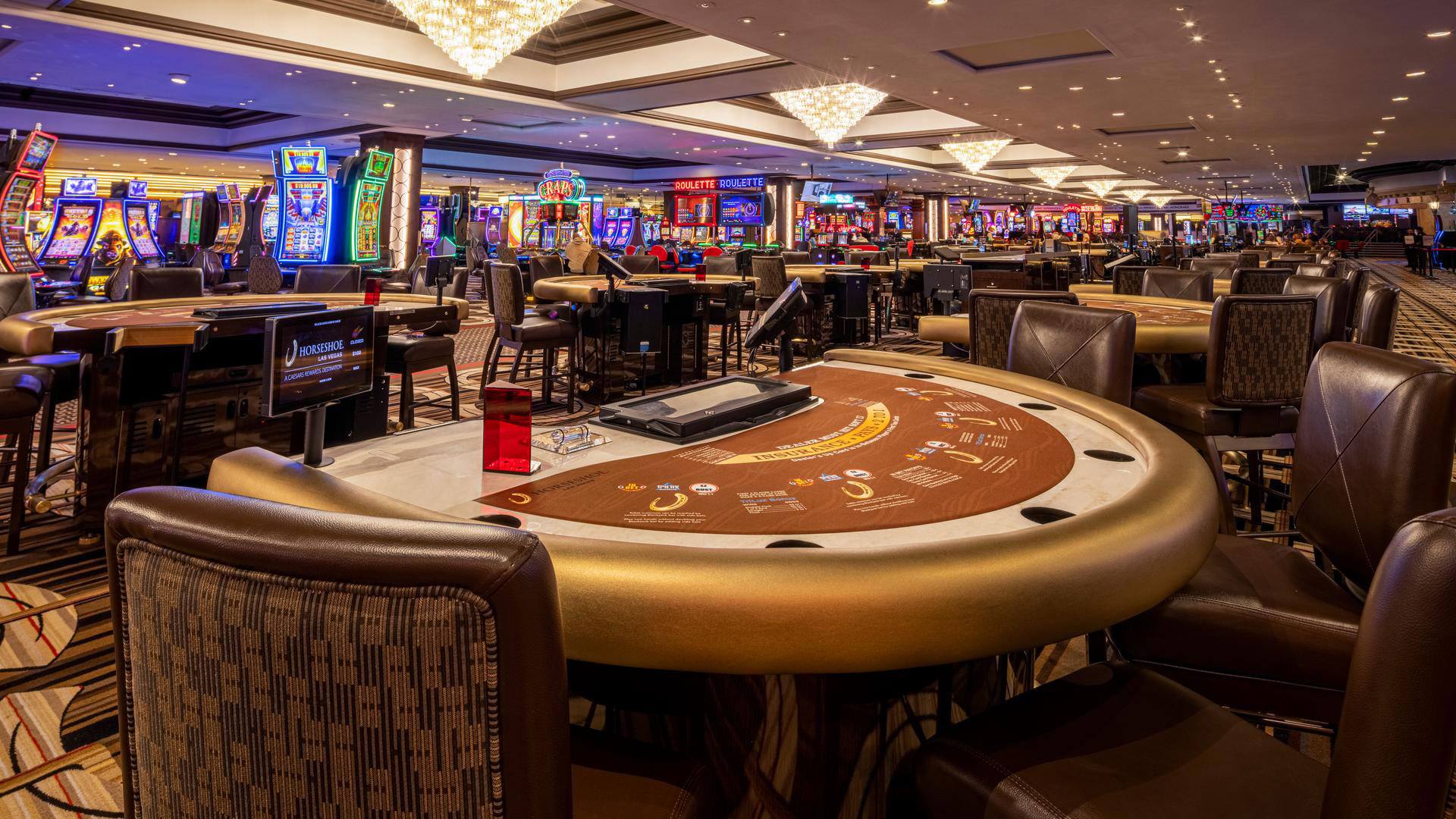
Together with valuable information about latest online casino offers and much more, our mission is to always provide you with the best online casino choice, based on your own criteria’s. As outlined in the consultation, the fees payable for gaming machine notifications and gaming machine permits are not in scope of this review. We will keep the 15% increase in fees under review to ensure that its impact is proportionate both to the funding requirements of licensing authorities and the financial pressures placed on operators.
This is an important measure to create a clear distinction between gambling products for adults and lower risk products accessible to children (such as crane grabbers or coin pushers) which have non-cash prizes or are entirely unlike adult gambling products. The majority of responses were in favour of an age restriction. The government understands some of the arguments put forward by industry, particularly about the potential impact on player behaviour if net position and time was permanently on display on the machine. They also argued that it is an invasion of a customer’s privacy and that many people would not be comfortable with other players knowing how much they have spent and how long they have played on a machine for.

Licensing authorities are given the power to decide not to issue further casino premises licences in their area. 428.Applications for premises licences must be made to the licensing authority in whose area the premises are wholly or partly situated; and must be in the prescribed form and manner, accompanied by the prescribed fee. 409.This section describes, in subsection (1), the premises licences that may be issued by a licensing authority. 408.Part 10 contains provisions concerning gaming machines, and the categorisation of machines by the Secretary of State.
For non-remote betting facilities, this would be a non-remote general betting (standard) operating licence. The effect of the amendments made by Regulation 2 (of the 2025 Regulations) is to make it clear that only gaming tables controlled or operated by casino staff can qualify as a gaming table for the purposes of calculating gaming machine allowances. These Regulations extend to England, Wales and Scotland and apply to all gaming tables in casinos from 22 July 2025.
The Gambling Commission will also undertake a review of gaming machine technical standards, to include assessment of the role of session limits across Category B and C machines and the role of safer gambling tools. While online operators are able to track play precisely and apply more tailored player protections, land-based casinos have adopted a range of measures in recent years that have enhanced player protections and tracking. Licensing authorities (local authorities in England and Wales and licensing boards in Scotland) are responsible for licensing gambling premises, in parallel with the Gambling Commission licensing of operators. There have been substantial changes to how consumers make payments in society since the ban on direct debit card use on gaming machines. Measures that we are seeking views on are intended to address inconsistencies between the different types of casino licence, as well as levelling the playing field to an extent between land-based and online operators.
The consideration of representations should be the same as that for normal applications for premises licences, detailed in Part 7 of this guidance. As with all deliberations in premises licences, the authority should not confuse planning and building regulation considerations with the matter before it. It is possible that the number of applications that the relevant licensing authorities will receive will exceed the number of licences available. Where an application is made in the form of a provisional statement it is to be treated in the same way as an application for a casino premises licence and included in any two-stage determination process that the authority is required to carry out.
This free service is mandatory for all remote licensees. Look for a statement such as “Licensed by the Gambling Commission” with an accompanying licence number. Follow these steps to confirm an operator holds a valid UKGC licence Always verify an operator’s licence before depositing funds. Note that Northern Ireland has separate gambling legislation and is not within the Commission’s jurisdiction. See which bonus structures are compliant and how new regulations protect British players.
This will take into consideration that there is likely to casino not on gamstop be diminishing returns, such that the more machines you have, the less GGY would be generated per machine. This will be used to model the estimated total increase in GGY for casinos in the final impact assessment. Combining this with the number of machines, this yields an average annual GGY of £57,500 per machine.
Therefore, we would welcome any responses which highlight concerns about this approach and how non-gambling areas could be calculated using a different method. However, we want to avoid any regulation that would allow table gaming areas to be placed in obscure or less accessible areas for customers so that a genuinely mixed offering of products remains in the casino. We appreciate that for commercial reasons and for a better customer experience, tables are already grouped together in casinos, often in one large area.
Such permission may come from a licence, permit, or registration granted in accordance with the Act or from an exemption given by the Act. The primary legislation governing gambling in Great Britain is the Gambling Act 2005 (opens in new tab). Where a licensing authority issues a provisional statement following a two-stage determination process, they may limit the period of time for which the statement has effect. There is no right of appeal against the grant or refusal at stage two although an applicant may seek judicial review of a licensing authority’s decision. Until any appeal has been determined, the licensing authority may not proceed to stage two. The provisional decision of the licensing authority at stage one may be appealed.